


We're on a Mission to Make Quitting Smoking Easier
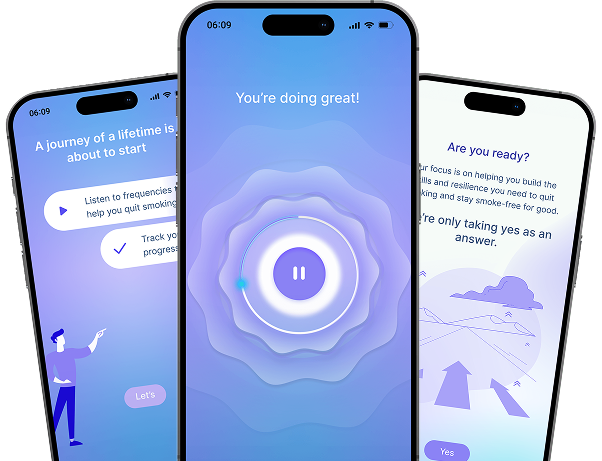
Quit Frequencies was created to offer a new, natural path to freedom from nicotine addiction. We combine sound frequency therapy with guided support to help people quit smoking without medications, patches, or willpower alone.
Too many people struggle to quit because traditional methods don’t address the neurologicalpatterns that keep cravings alive. We’re changing that.
A New Approach
Traditional methods like patches and gum work for some, but millions struggle with side effects or relapse because these methods don’t address the root cause. Cravings aren’t just physical. They’re neurological patterns reinforced over years of smoking.
Sound frequency therapy has been studied for its ability to influence brainwave activity and reduce stress. Quit Frequencies applies this science to nicotine addiction, pairing targeted frequencies with behavioral support to help users break the cycle.
Our method works with your brain, not against it. By promoting calm, focused states during withdrawal, we help you stay on track without relying on willpower alone.
Research: NIH Study | PMC Research | Psychology Today
Proven by Real People
Over 1,200 people have participated in the Quit Frequencies program. Up to 86% of committed users who complete the 21-day program report being smoke-free or significantly reduced usage.
- 1,200+ People Helped
- 21-Day Structured Program
- Up to 86% Success Rate for Committed Users
- Millions Saved on Cigarettes
- 1,200+ Families Free from Worry
Success Stories
Frequently Asked Questions
Is this scientifically proven?
Sound frequency therapy has been studied for its effects on brainwave activity, stress reduction, and anxiety management. While research is ongoing, up to 86% of committed users who complete our 21-day program report being smoke-free or significantly reduced usage.
How long does it take to quit?
Quit Frequencies is structured as a 21-day program. Most users notice reduced cravings within 7–10 days, with peak engagement and habit reinforcement occurring between days 5–14. By day 21, many users experience a major mindset and behavior shift when following the program consistently
What results can I expect?
Days 1–4: Orientation and habit setup
Days 5–10: Noticeable reduction in cravings for many users
Days 11–14: Increased consistency and habit reinforcement
Day 21: Major mindset and behavior shift when followed consistently
Can I use this with other quit methods?
Yes. Quit Frequencies can complement other methods like therapy, support groups, or nicotine replacement (consult your doctor). Many users find it enhances their overall quit strategy.
What if I relapse?
Relapse is part of recovery for many people. Quit Frequencies includes guidance on how to reset, refocus, and keep moving forward without shame or judgment.